Understanding Incontinence in Dementia: A Gentle Guide for Carers
Incontinence can be a challenging part of dementia care, but it is not a failure of care. Explore the reasons continence may change and learn practical, compassion ways to support hydration, routines, dignity and comfort.
Sep 17, 2026
Incontinence Is Not a Failure of Care
Changes with bladder or bowel control can be distressing for both the person living with dementia and their caregiver.
It can sometimes feel embarrassing, frustrating or overwhelming.
But accidents are not a sign that someone is failing and they are not necessarily a sign that a caregiver is doing something wrong.
Dementia can affect a person's ability to recognise the need to use the toilet, communicate that need, find the bathroom or remember what to do once they get there.
Understanding the possible reasons can help caregivers respond with patience and dignity.
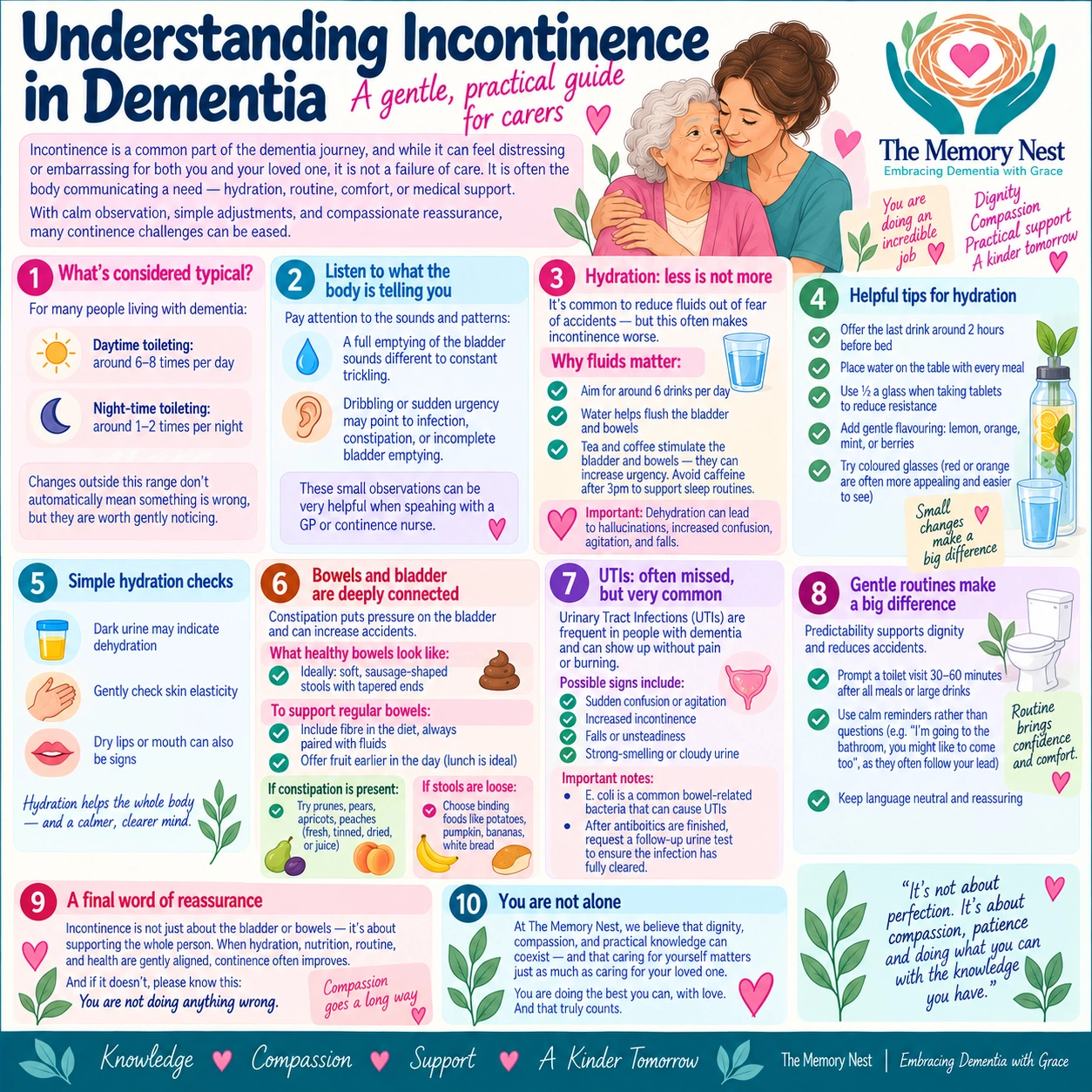
Listen to What the Body Is Telling You
Changes in toileting patters can sometimes provide useful clues.
For example, a sudden change in bladder habits, increased urgency, discomfort, confusion or new accidents may sometimes be associated with issues such as constipation, infection, medication changes or other health concerns.
Keeping track of patterns can be helpful when speaking with a healthcare professional.
Hydration Still Matters
One common response to incontinence is to reduce how much a person drinks.
However, restricting fluids can contribute to dehydration and may create additional problems.
Instead, try making drinking easier and more appealing:
Offer drinks regularly throughout the day.
Keep water easily accessible.
Offer drinks with meals and snacks.
Use a familiar or easy-to-hold cup.
Consider preferred flavours where appropriate.
Avoid making drinks a course of pressure or conflict.
If there are medical reasons to restrict fluids, follow the person's healthcare professional's advice.
Constipation and Continence Can Be Connected
Constipation can affect bladder function and may be make continence more difficult.
Encouraging appropriate fluids, movement and fibre-containing foods can support healthy bowel habits for many people. Individual needs vary, so speak with a healthcare professional if constipation is persistent or concerning.
UTIs and Sudden Changes
Urinary tract infections can sometimes cause noticeable changes in a person living with dementia.
Possible signs may include:
A sudden increase in confusion or agitation
New or worsening incontinence
Changes in urination
Feeling generally unwell
Changes in behaviour
These symptoms can have many possible cause, so don't assume that a UTI is responsible. If there is a sudden change in someone's health or behaviour, seek appropriate medical advice.
Routine Can Bring Comfort
Predictable routines can make toileting easier.
Depending on the person's needs, gentle reminders to use the toilet at regular times such as after meals or before leaving the house may help.
Protecting Dignity Matters
Incontinence is about more than bladder and bowel function. It can affect a person's confidence, independence and sense of dignity.
Responding calmly can make a difficult moment feel less frightening.
Avoid shaming, blaming or showing frustration when accidents happen.
It is not about perfection. It's about compassion, patience and doing what you can with the knowledge you have.
At The Memory Nest, we believe that dignity, compassion and practical knowledge can coexist because caring for your loved one also means caring for yourself.