When Toileting Changes in Dementia: The Hidden Grief, Embarrassment and Reality No One Talks About
Toileting changes can be one of the most confronting parts of dementia care. Explore why these changes happen, the emotional impact on families and practical ways to support dignity, comfort and independence.
Sep 21, 2026
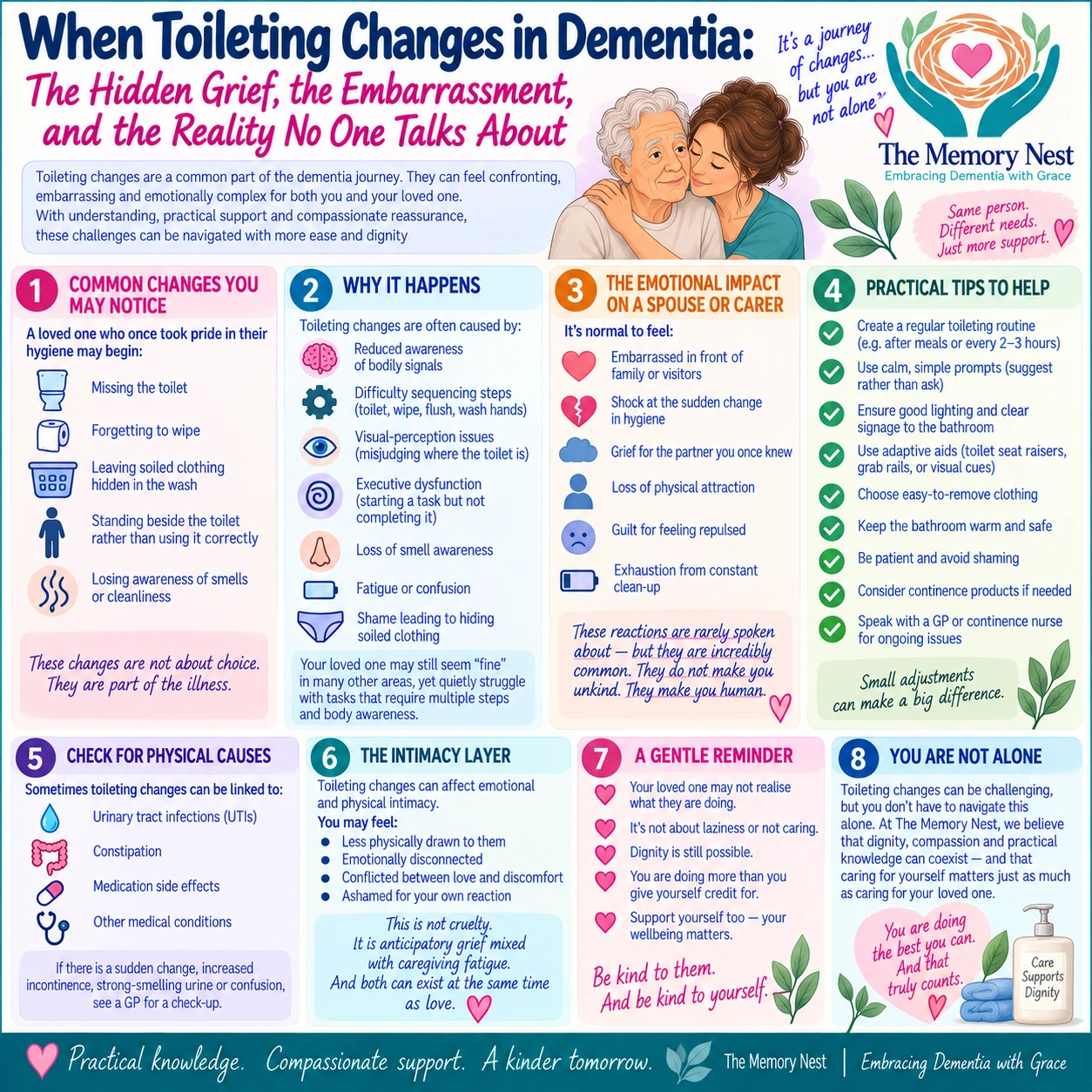
A Difficult Part of the Dementia Journey
Toileting changes can be one of the most difficult parts of caring for someone living with dementia.
A person who once took great pride in their hygiene may suddenly:
Miss the toilet
Forget to wipe
Leave soiled clothing hidden
Stand beside the toilet without using it correctly
Lose awareness of smells or cleanliness
These changes can be confronting for everyone involved. But they are not necessarily about choice, laziness or not caring.
Dementia can affect the brain processes involved in recognising bodily signals, understanding the environment and completing familiar sequences of tasks.
Why Do Toileting Changes Happen?
Several changes associated with dementia can contribute to toileting difficulties.
A person may experience:
Reduced awareness of bodily signals
They may not recognise the need to use the bathroom until it becomes urgent.
Difficulty sequencing steps
Using the toilet involves several steps. Finding it, getting there, adjusting clothing, using the toilet, wiping and washing hands.
Dementia can make completing these familiar sequences increasingly difficult.
Visual-perception changes
The person may have difficulty identifying the bathroom or understanding where the toilet is.
Executive function changes
They may begin a task but struggle to complete all the necessary steps.
Changes in smell awareness
They may no longer notice odours or recognise that clothing needs changing.
Fatigue or confusion
When someone is tired or overwhelmed, familiar tasks can become even more difficult.
The Emotional Impact on Caregivers
The practical side of toileting is only part of the story.
Caregivers may experience emotions they don't always feel comfortable talking about.
You might feel:
Embarassed in front of family or visitors
Shocked by changes in hygiene
Grief for the person you once knew
Less physically or emotionally connected
Guilty about feeling frustrated or uncomfortable
Exhausted from constant cleaning and laundry
These feelings don't make you unkind.
They make you human.
Practical Ways to Help
Small changes can make toileting easier.
Create a predictable routine.
Consider offering regular toilet visits, such as after meals or at consistent intervals.
Use calm, simple prompts.
Rather than asking complicated questions, gently suggest what needs to happen.
Make the bathroom easy to find.
Good lighting, clear pathways and simple signage can help.
Consider adaptive equipment.
Depending individual needs, equipment such as grab rails or a raised toilet seat may improve safety.
Choose easy-to-remove clothing.
Simple clothing can make toileting easier and reduce frustration.
Keep the bathroom comfortable.
A warm, safe and uncluttered environment can help.
Avoid shame.
Accidents and toileting difficulties are not opportunities for blame.
Consider continence products when appropriate.
They can help manage accidents and protect comfort and dignity.
Don't Forget to Check for Physical Causes
A sudden change in toileting can sometimes be related to a health problem rather than dementia itself.
Possible contributors include:
Urinary tract infections
Constipation
Medication side effects
Other medical conditions
If there is a sudden increase in incontinence, strong-smelling urine, pain, confusion, fever or other noticeable change, speak with appropriate healthcare professional.
The Intimacy Layer
Toileting changes can also affect relationships.
A partner or spouse may experience feelings of:
Emotional disconnection
Reduced physical attraction
Grief
Discomfort
Guilt about their own reactions
These feelings can be difficult to acknowledge.
But experiencing them does not mean you don't love the person.
Caregiving fatigue and love can exist at the same time.
Protecting Dignity Is Still Possible
The person you love may not always realise what is happening.
They may not understand why their clothing needs changing or why you are helping them in the bathroom.
That doesn't mean their dignity no longer matters.
Speak respectfully.
Offer choices where possible.
Keep your voice calm.
Give them privacy whenever it is safe to do so.
And remember that the person is still the same person `even though their needs have changed.
At The Memory Nest, we believe dignity, compassion and practical knowledge can coexist.
You are doing more than you may realise.
Be kind to them. And be kind to yourself.
Practical knowledge. Compassionate support. A kinder tomorrow.