The Many Roles of a Dementia Caregiver and Why It Can Feel So Heavy
Being a dementia caregiver often means taking on many roles at once. From nurse and cook to advocate, companion and safety officer. Understanding this emotional load can help caregivers recognise their own needs and seek support without guilt.
Sep 18, 2026
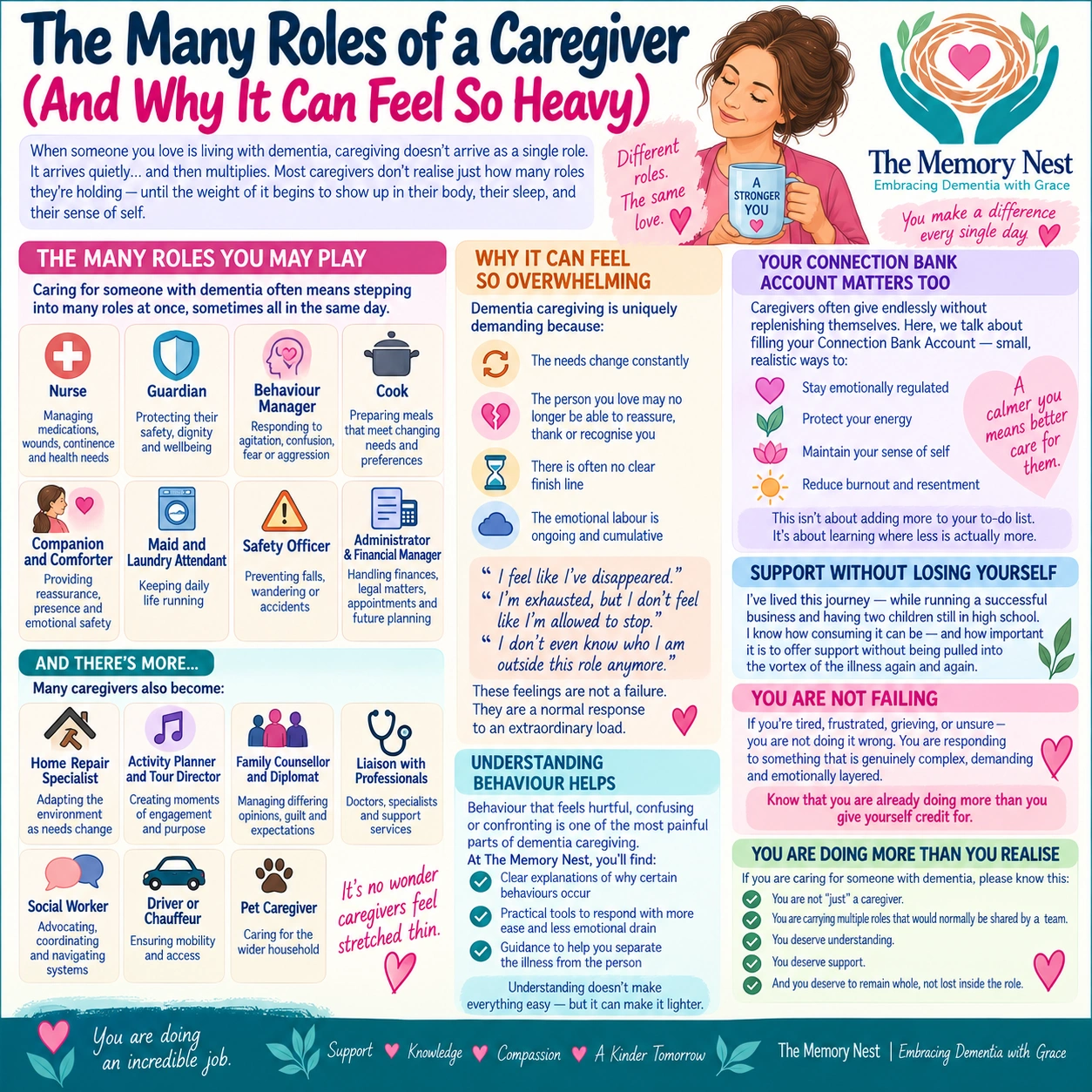
You Are More Than "Just a Caregiver"
When someone you love is living with dementia, caregiving rarely arrives as a single role.
It starts quietly.
Then the responsibilities multiply.
Before long, you may find yourself doing things you never imagined you would have to do; sometimes all within the same day.
You aren't simply a caregiver.
You may be a nurse, guardian, cook, companion, administrator, safety officer, driver, advocate and emotional support person all at once.
And that's a lot for one person to carry.
The Many Roles You May Take On
A dementia caregiver may find themselves becoming:
A Nurse
Managing medications, appointments, health concerns and continence needs.
A Guardian
Protecting safety, dignity and wellbeing.
A Behaviour Manager
Responding to confusion, fear, agitation or changes in behaviour.
A Cook
Preparing meals around changing preferences, appetite and abilities.
A Companion
Providing reassurance, emotional safety, conversation and connection.
A Maid and Laundry Attendant
Keeping up with cleaning, washing and everyday household tasks.
A Safety Officer
Watching for falls, wandering, accidents and potential hazards.
An Administrator
Managing finances, appointments, paperwork and future planning.
And that's only the beginning.
You may also become a home-repair specialist, activity planner, family counsellor, liaison with healthcare professionals, social worker, driver or even a pet caregiver.
Why Can It Feel So Overwhelming?
Dementia caregiving can be uniquely demanding because the needs may constantly change.
The person you love may no longer be able to reassure you, thank you or recognise everything you are doing.
There may be no clear finish line.
And the emotional work can build up over time.
If you've felt this way, it doesn't mean you're failing.
It can be a natural response to carrying an extraordinary load.
Your Connection Bank Matters Too
Caregivers often give endlessly without taking time to replenish themselves.
Think about your own Connection Bank.
Small things that can help you protect it:
Stay emotionally regulated where possible.
Protect your energy.
Maintain parts of your identity outside caregiving.
Make time for relationships that support you.
Ask for help before you reach breaking point.
Give yourself permission to rest.
Self-care doesn't have to mean adding another task to an already overwhelming list.
Understanding Behaviour Can Make Things Lighter
Some dementia-related behaviours can feel hurtful, confusing or confronting.
Understanding why they happen can help you respond with greater patience and less emotional distress.
A person's behaviour is not always a reflection of how they feel about you.
Understanding doesn't make everything easy. But it can make it lighter.
You Are Not Failing
If you're tired, frustrated, grieving or unsure, you are not necessarily doing something wrong.
You are responding to something genuinely complex, demanding and emotionally layered.
You are not "just" a caregiver.
You are carrying multiple roles that would normally be share among a team.
You deserve understanding.
You deserve support.
And you deserve to remain whole, rather than becoming lost inside the role.
If you're caring for someone with dementia, take a moment to recognise everything you're already doing.
At The Memory Nest, we believe caregivers deserve the same compassion and understanding they so generously give to others. Our goal is to provide explanations, practical tools and compassionate guidance to help caregivers understand what may be happening while separating the illness from the person they love.