Eating & Appetite Changes in Dementia: Why Food Habits change and How to Respond with Compassion
Eating habits can change in unexpected ways when someone is living with dementia. Learn why these changes happen and discover gentle, compassionate ways to make mealtimes calmer, more comfortable and more supportive.
Sep 17, 2026
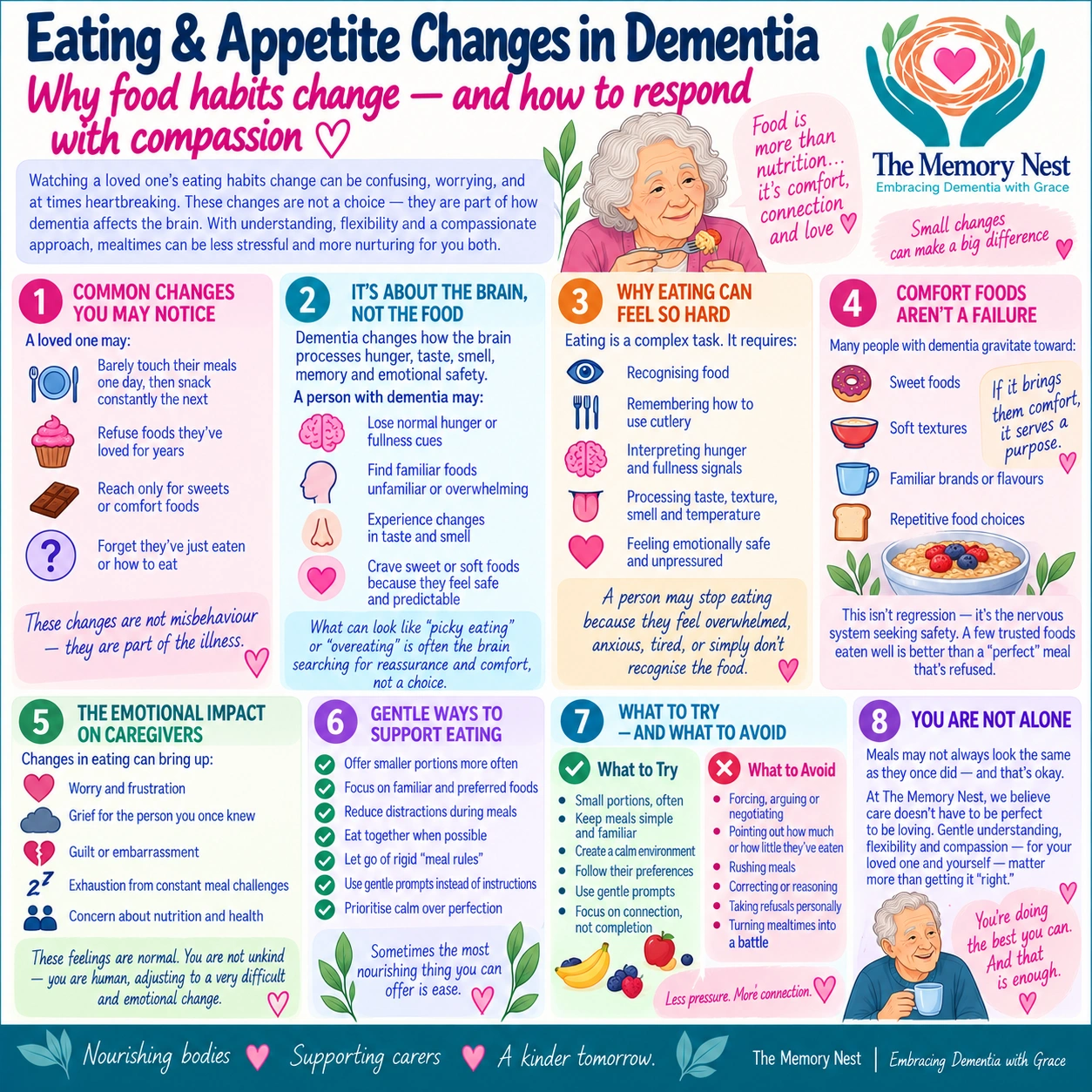
When Eating Habits Change
Watching someone you love change the way they eat can be confusing and worrying.
A person living with dementia may suddenly eat very little, prefer only sweet foods, refuse meals they once enjoyed, forget that they have eaten or become interested in the same foods repeatedly.
These changes are not necessarily a matter of being difficult or stubborn. Dementia can affect the brain's ability to recognise hunger, taste, smell, food and even the steps involved in eating.
Understanding this can help make mealtimes calmer for everyone.
Why Does Dementia Affect Eating?
Eating involves much more than simply being hungry.
A person needs to recognise the food, understand what it is, remember how to use utensils, process its smell and texture and feel comfortable enough to eat.
Dementia can affect some or all of these abilities.
Changes in taste and smell may also make familiar foods seen different. Some people may prefer softer textures, familiar brands, sweet foods or foods that feel comforting and predictable.
Comfort Foods Aren't a Failure
It's easy for caregivers to worry when a loved one chooses foods that aren't what they consider a "perfect" meal.
But if a familiar or preferred food helps someone eat, enjoy the moment and feel safe, it can have value.
Food is more than nutrition. It can also provide comfort, connection and familiarity.
Gentle Ways to Support Mealtimes
Try:
Offering smaller portions more often.
Keeping meals simple and familiar.
Following the person's food preferences where possible.
Reducing noise and distractions during meals.
Eating together when possible.
Offering gentle prompts instead of giving instructions.
Creating a calm and comfortable environment.
Focusing on connection rather than finishing every meal.
Avoid turning mealtimes into a battle. Forcing, arguing, rushing or repeatedly pointing our how little someone has eaten can increase anxiety and make eating even harder.
Remember: You Are Not Alone
Eating changes can be emotionally difficult for caregivers too. You may feel worried, frustrated, guilty or exhausted.
These feelings don't mean you're doing a bad job.
Caring for someone with dementia often means adjusting expectations and finding new ways to support them.