Triggers of Stress in Dementia: What to Watch For
Stress and distress in dementia can have many causes, from noise and unfamiliar environments to pain, fatigue or changes in routine. Learn how recognising triggers can help caregivers respond with greater understanding and compassion.
Sep 23, 2026
What Is Behind the Distress?
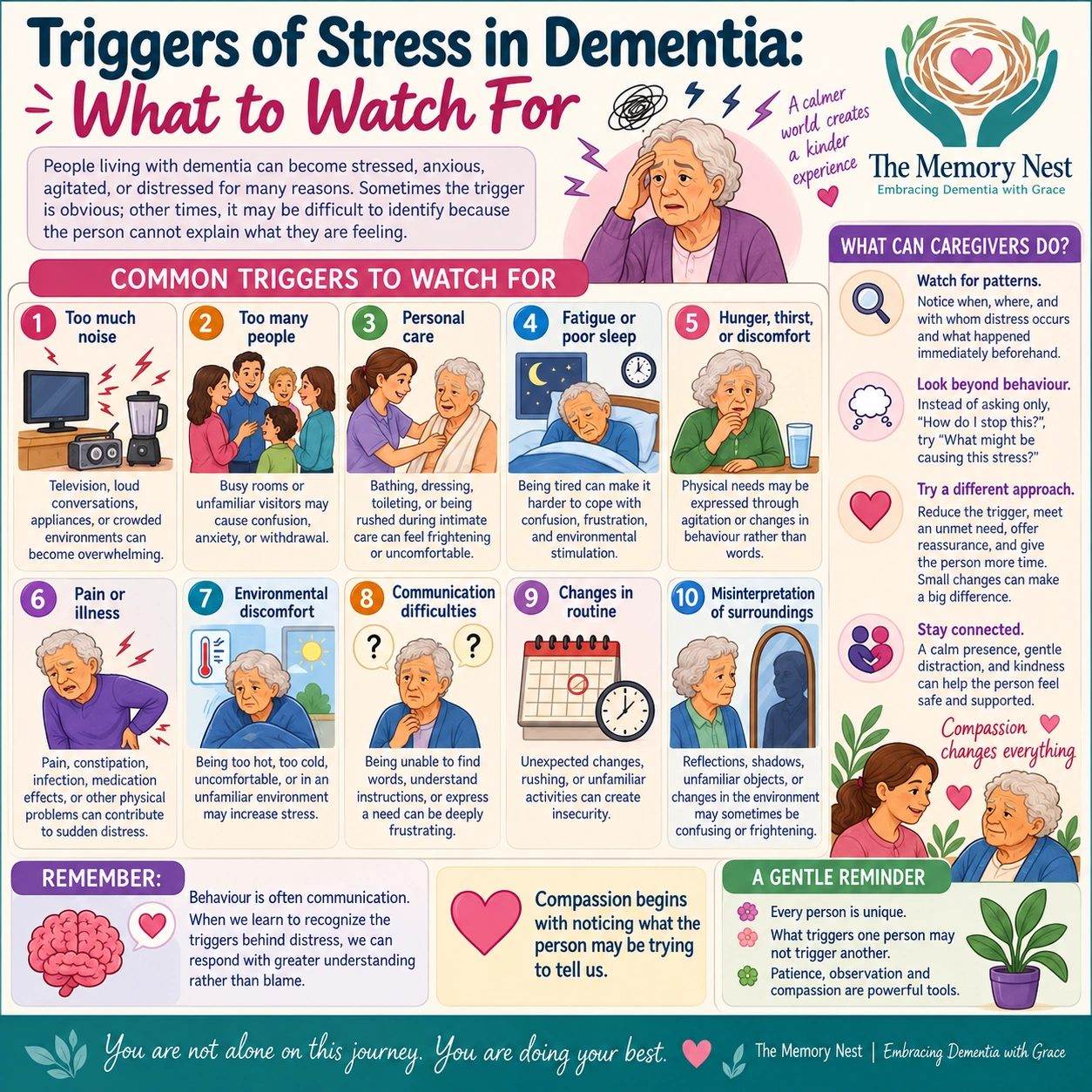
People living with dementia can become stressed, anxious, agitated or distressed for many different reasons.
Sometimes the trigger is obvious.
Other times, it can be difficult to understand because the person may not be able to explain what they're feeling or what is bothering them.
10 Common Triggers to Watch For
1. Too Much Noise
Television, loud conversations, appliances or several sounds happening at once can become overwhelming.
A quieter environment may help reduce sensory overload.
2. Too Many People
Busy rooms, unfamiliar visitors or large gatherings may cause confusion, anxiety or withdrawal.
Consider giving the person access to a quieter space when needed.
3. Personal Care
Bathing, dressing, toileting and other intimate care can feel frightening or uncomfortable, particularly when someone doesn't understand what is happening.
Slow down, explain what you're doing and provide reassurance.
4. Fatigue or Poor Sleep
Being tired can make it harder for someone to cope with frustration, confusion and environmental stimulation.
Pay attention to whether distress happens more often when the person is tired.
5. Hunger, Thirst or Discomfort
Physical needs may sometimes appear as changes in behaviour rather than words.
Look for signs that the person may be hungry, thirsty, uncomfortable or in need of the bathroom.
6. Pain or Illness
Pain, constipation, infection, medication effects or other physical health problems can contribute to sudden distress.
A noticeable or sudden change should not automatically be assumed to be part of dementia.
If you are concerned about a change in health or behaviour, seek appropriate medical advice.
7. Environmental Discomfort
Being too hot, too cold, uncomfortable, or placed in an unfamiliar environment can increase stress.
Simple environmental adjustments may make a meaningful difference.
8. Communication Difficulties
Imagine knowing that something is wrong but being unable to find the words to explain it.
Difficulty understanding instructions or expressing a need can be incredibly frustrating.
Use short, clear language and allow plenty of time for the person to respond.
9. Changes in Routine
Unexpected changes, rushing, unfamiliar activities or disruptions to established routines can create insecurity.
Where possible, maintain familiar routines and prepare the person for changes ahead of time.
10. Misinterpretation of Surroundings
Reflections, shadows, unfamiliar objects or changes in the environment can sometimes be confusing or frightening.
Look at the environment from the person's perspective and consider what might appear unfamiliar or threatening.
What Can Caregivers Do?
Watch for patterns.
Notice when, where and with whom distress occurs.
Also think about what happened immediately beforehand.
Was there a loud noise?
Had someone just entered the room?
Was it time for personal care?
Had the person's routine changed?
Was the person tired or hungry?
These details can help reveal patterns.
Look Beyond the Behaviour
Instead of seeing behaviour only as something that needs to be stopped, consider what the person may be communicating.
They may be saying:
"I'm overwhelmed."
"I'm frightened."
"I'm uncomfortable."
"I don't understand what's happening."
"I need something, but I can't explain what it is."
This change in perspective can help caregivers respond with greater compassion.
Try a Different Approach
Once you've identified a possible trigger, try reducing it.
You might:
Lower background noise.
Move to a quieter room.
Give the person more time.
Offer reassurance.
Simplify your instructions.
Adjust the temperature or lighting.
Return to a familiar routine.
Address hunger, thirst or discomfort.
Give the person space when appropriate.
Sometimes a small change can make a big difference.
Stay Connected
When someone is distressed, your presence can be reassuring.
A calm voice, gentle approach and patient attitude can help the person feel safer.
You don't always have to find the perfect words.
Sometimes simply being present is enough.
Every Person Is Different
There is no single list of triggers that applies to everyone living with dementia.
What overwhelms one person may not bother another.
The key is observation.
Get to know the individual, their routines, preferences and patterns.
At The Memory Nest, we believe compassion begins with noticing what the person may be trying to tell us.
You are not alone on this journey.