10 Early Signs of Dementia: What to Look For and When to Pause
Noticing changes in someone you love can feel unsettling. Discover 10 early signs of dementia and learn when changes may be worth discussing with a health professional.
Sep 16, 2026
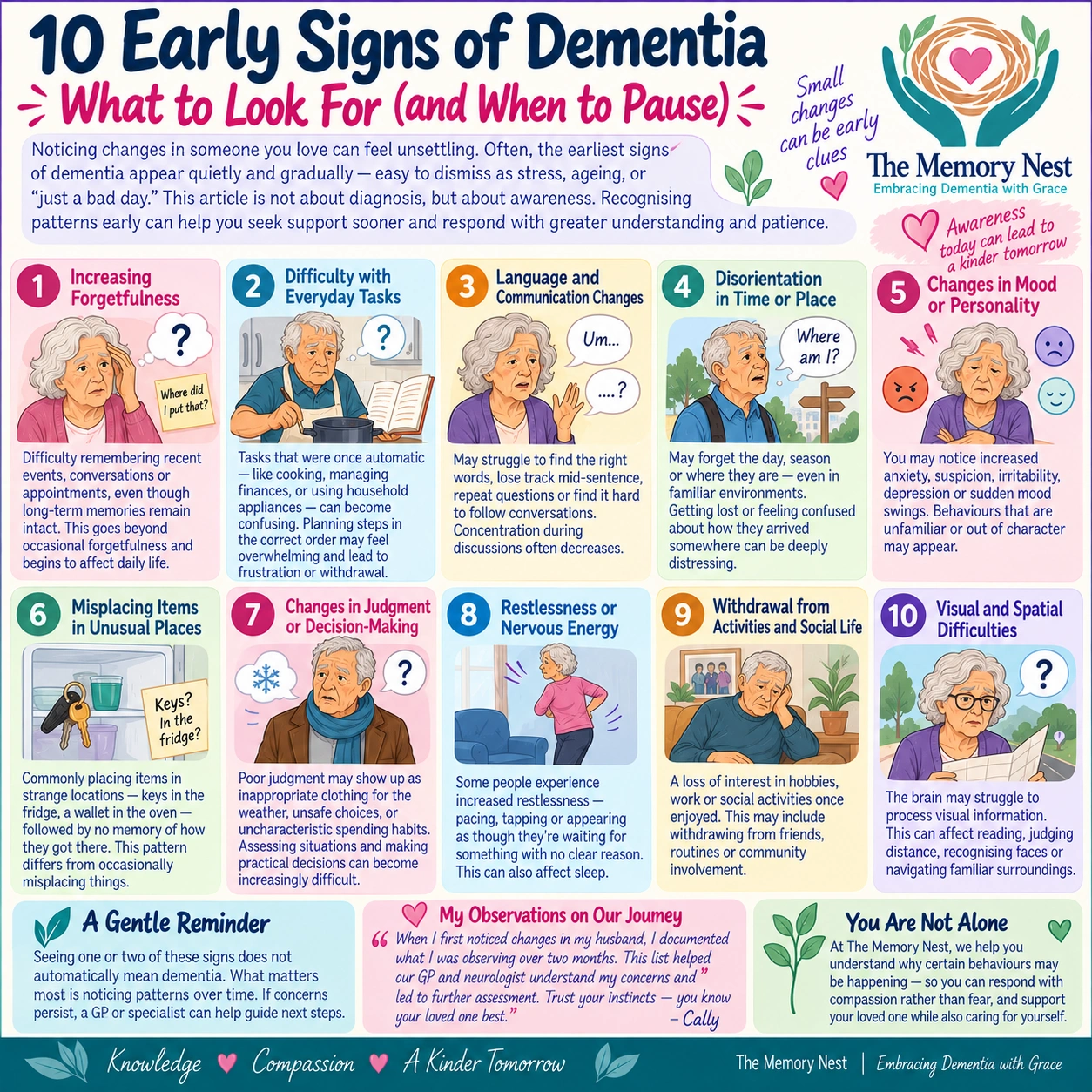
10 Early Signs of Dementia: What to Look For and When to Pause
Noticing changes in someone you love can feel unsettling.
Some early changes associated with dementia can appear quietly and gradually. They can be dismissed as stress, ageing, tiredness or simply having a bad day.
This doesn't mean that every change is dementia. But noticing patterns over time can help you know when it may be worth seeking further support.
The goal isn't to diagnose your loved one yourself.
It's to notice, understand and respond with compassion.
Let's Look at the Signs More Closely
Increasing Forgetfulness
You may notice difficulty remembering recent conversations, appointments or events. Even when older memories remain clear.
Occasional forgetfulness happens to everyone. What matters is wether memory difficulties become more frequents or begin affecting everyday life.
Difficulty With Everyday Tasks
Tasks that were once familiar and automatic may suddenly become difficult.
This could include managing finances, cooking familiar meals, using household appliances, following routines or remembering the steps involved in everyday tasks.
Changes in Language and Communication
Someone may struggle to find the right word, lose track of a sentence, repeat themselves or find it harder to follow conversations.
They may become frustrated when they can't express what they want to say.
Disorientation in Time or Place
Someone may become confused about the day, season, where they are, where they were going or how they arrived somewhere.
Becoming lost or confused in a previously familiar environment can be particulary distressing.
Changes in Mood or Personality
Changes aren't always about memory.
You may notice increased anxiety, irritability, suspicion, withdrawal, sadness or other noticeable changes in mood or behaviour.
Misplacing Items in Unusual Places
Everyone loses their keys occasionally.
But a pattern of putting everyday objects in unusual places may be worth noticing, particulary when the person cannot remember how the item got there.
Changes in Judgement or Decision-Making
Changes in judgement can sometimes appear as unusual or unsafe decisions.
Someone may have difficulty assessing situations, making everyday decisions or recognising risks that would previously have been obvious to them.
Restlessness or Increased Nervous Energy
Some people experience increased restlessness.
This might look like pacing, tapping, repeatedly moving around or appearing unable to settle.
These changes can also affect sleep and daily routines.
Withdrawal From Activities and Social Life
Some may gradually lose interest in hobbies, work, social activities or routines they once enjoyed.
They may begin avoiding friends, family gatherings or community activities.
Sometimes withdrawal happens because activities that were once easy have started to feel confusing or overwhelming.
Visual and Spatial Difficulties
Changes in the way the brain processes visual information can affect everyday activities.
Someone may have difficulty with reading, judging distance, recognising familiar faces, navigating familiar surroundings or understanding where objects are in relation to each other.
A GENTLE REMINDER
Seeing one or two of these signs does not automatically mean someone has dementia.
There can be many reasons for changes in memory, behaviour, mood, communication or daily functioning.
What matters is noticing patterns, changes and their impact over time.
If you're concerned about someone you love, consider keeping a simple record of what you've notices and discussing your concerns with qualified health professional.