
Gentle support for those loving and caring for someone with dementia.
The Memory Nest provides practical guidance, trusted resources, and simple tools to help you navigate the challenges of dementia care. This space is designed to support you with clarity, compassion, and reassurance helping you feel steadier, more informed, and confident in your caregiving journey


This space offers guidance and resources to support carers and is designed to complement — not replace — professional care and personal support networks, through my lived experiences and acquired knowledge during my journey.
The Memory Nest is a place for guidance, insight, and shared understanding. While it is shaped by lived experience, it is intentionally designed to empower carers rather than carry their journey for them.

About The Memory Nest
The Memory Nest was created to offer calm, practical guidance for those caring for a loved one with dementia — grounded in lived experience and delivered with compassion and clarity.
After walking a seven-year journey caring for my husband through Young Onset Dementia, I learned how overwhelming and disorienting dementia care can be, especially when you don’t fully understand the behaviours you’re witnessing or how to respond to them with confidence.
This platform exists to help carers better understand why certain changes and behaviours occur, and to offer simple, practical tools that support care without adding pressure or emotional overload.
Alongside dementia-specific guidance, The Memory Nest also encourages carers to care for themselves — recognising that sustainable care requires moments of connection, rest, and replenishment. Through the Connection Bank Account approach, drawn from my Sacred Connections work, carers are supported to build small, meaningful moments of connection with their loved one and with themselves, helping reduce burnout and emotional depletion.
The Memory Nest is designed as a supportive resource and educational space — not as a substitute for counselling, therapy, or professional care. Its purpose is to offer insight, tools, and trusted resources so carers feel more informed, steadied, and resourced as they navigate their own journey.
This is a place for clarity, compassion, and practical support — offered with care, and with respect for everyone’s boundaries.
This space offers guidance and resources to support carers and is designed to complement — not replace — professional care and personal support networks, through my lived experiences and acquired knowledge during my journey.

How The Memory Nest Supports You
Dementia care is complex, and no single person or platform can hold everything, while no single person’s journey is the same either.
The Memory Nest is designed to work alongside your existing supports — helping you better understand behaviors, make sense of changes, and approach care with greater clarity and calm.
This space can help you:
feel more informed before medical or professional appointments
reduce confusion around common dementia behaviors
build emotional steadiness through practical self-care approaches
identify when additional professional support may be helpful
By offering education, tools, and trusted resources, The Memory Nest supports careers to feel more resourced — while encouraging a broader, sustainable support system.
This space offers guidance and resources to support carers and is designed to complement — not replace — professional care and personal support networks, through my lived experiences and acquired knowledge during my journey.
What I Share Here
The Memory Nest is a resource-led space. The content shared here focuses on:
Practical explanations of common dementia behaviours
Tools and strategies to support daily care and communication
Education that helps carers feel more informed and less overwhelmed
Gentle self-care practices that support emotional steadiness
The Connection Bank Account approach for sustaining your own wellbeing
Curated external resources and referrals for further support
This content is designed to inform, guide, and empower — so you can navigate your own journey with greater clarity and confidence.
What I Don’t Offer in This Space
To protect both carers and the integrity of this platform, The Memory Nest does not provide:
One-to-one emotional counselling or crisis support
Ongoing personal processing of grief, trauma, or anticipatory loss
Real-time emotional support via messages, comments, or email
Medical advice, diagnosis, or treatment recommendations
Substitute care for professional or clinical services
This boundary allows the support offered here to remain steady, ethical, and sustainable.
How to Engage Safely
You are welcome to:
Read, reflect, and take what is helpful
Use the tools provided at your own pace
Explore recommended external supports when deeper care is needed
If you’re experiencing emotional distress, burnout, or crisis, I gently encourage you to seek support from qualified professionals or trusted services in your area.
This space offers guidance and resources to support carers and is designed to complement — not replace — professional care and personal support networks, through my lived experiences and acquired knowledge during my journey.

About Me
Hi I'm Cally Jennings the Founder of Memory Nest
I didn’t choose this path because I planned to. I chose it because I lived it.
For seven years, I cared for my husband through Young Onset Dementia — a journey that reshaped everything I thought I knew about love, partnership, grief, and resilience. Along the way, I navigated the quiet heartbreaks no one prepares you for: the gradual losses, the role reversals, the emotional exhaustion, the loneliness, and the moments of deep tenderness that existed alongside it all.
I learned very quickly that dementia caregiving isn’t just about managing symptoms or appointments — it’s about caring for yourself while loving someone whose world is slowly changing.
This space was created for careers, partners, and family members who are doing their best in an impossible situation — often without enough support, guidance, or understanding.
Here, I share practical tips, tools, and trusted resources to help you:
navigate the emotional and practical realities of dementia care
reduce overwhelm and burnout
feel less alone in your experience
make informed decisions with greater clarity and compassion
honour both your loved one and yourself
Everything I offer is grounded in lived experience, not theory. It comes from walking this path, learning what helped, what didn’t, and what I wish I had known sooner.
My intention is simple: to offer steadiness, honesty, and reassurance — and to remind you that your wellbeing matters too.
You don’t have to do this alone.
This space offers guidance and resources to support carers and is designed to complement — not replace — professional care and personal support networks, through my lived experiences and acquired knowledge during my journey.
Connection Bank Account
Caring for someone with dementia can slowly drain your emotional reserves — often without you realizing it.
The Connection Bank Account is a simple way to think about how moments of connection either add to or draw from your emotional capacity. When your account is depleted, everything feels harder. When it’s supported, you’re better able to respond with patience, clarity, and care.
Credits don’t need to be big. They might include:
a moment of calm connection with your loved one
time outdoors or a quiet pause for yourself
a supportive conversation or trusted resource
rest, boundaries, or moments of pleasure
By intentionally adding small credits, you protect your wellbeing and reduce burnout - allowing care to come from steadiness rather than exhaustion. The daily challenges, grief and frustrations will debit from your account constantly beyond your control, so you want your account to have credits there regularly to sustain the debits (just like you would run a regular bank account).
This approach is drawn from my broader Sacred Connections Coaching work and adapted here to support carers in a practical, accessible way.

Eating & Appetite Changes in Dementia
Why food habits change — and how to respond with compassion
Watching a loved one’s eating habits change can be confusing, worrying, and at times heartbreaking.
One day they barely touch their meals. The next day they ask for snacks constantly. They may suddenly refuse foods they’ve loved for years, or reach only for sweets and familiar comfort foods.
It’s easy to feel frustrated or to wonder if they’re being stubborn, difficult, or “just not trying.” But these changes are not a choice — they are part of how dementia affects the brain.
It’s not about the food — it’s about the brain
Dementia changes how the brain processes hunger, taste, smell, memory, and emotional safety.
A person with dementia may:
Lose normal hunger or fullness cues
Forget they’ve just eaten — or forget how to eat altogether
Find familiar foods suddenly unfamiliar or overwhelming
Experience changes in taste and smell
Crave sweet or soft foods because they feel safe and predictable
What can look like “picky eating” or “overeating” is often the brain searching for reassurance and comfort, not misbehaviour.
Why eating can feel so hard for them
Eating is actually a complex task. It requires:
Recognising food
Remembering how to use cutlery
Interpreting hunger and fullness signals
Processing taste, texture, smell, and temperature
Feeling emotionally safe and unpressured
When dementia disrupts these processes, food can become confusing or even distressing.
A person may stop eating simply because:
They feel overwhelmed
They don’t recognise the food
They believe they’ve already eaten
They feel “full” even when they haven’t eaten
They are anxious, tired, or overstimulated
Comfort foods aren’t a failure — they’re a signal
Many people with dementia gravitate toward:
Sweet foods
Soft textures
Familiar brands or flavours
Repetitive food choices
This isn’t regression — it’s the nervous system seeking safety.
If a certain food brings calm, pleasure, or consistency, it may be serving a much deeper need than nutrition alone.
A caregiver truth worth holding onto
When someone with dementia eats too little or too much, it’s rarely about the food itself.
It’s about:
The brain struggling to interpret hunger signals
Memory gaps
Emotional comfort
Feeling safe and supported
Arguing, forcing, or correcting often increases distress — for both of you.
Gentle ways to support eating (without pressure)
Every person is different, but many families find it helpful to:
Offer smaller portions more often
Focus on foods that feel familiar and comforting
Reduce distractions during meals
Eat together when possible — modelling can help
Let go of rigid “meal rules”
Prioritise calm over perfection
Sometimes the most nourishing thing you can offer is ease.
You’re not doing this wrong
If meals have become a source of tension, worry, or grief, you are not failing — you are adapting to a changing landscape.
Dementia asks families to shift from how things used to be to what works now.
At The Memory Nest, we believe care doesn’t have to be perfect to be loving. Gentle understanding, flexibility, and compassion — for your loved one and yourself — matter more than getting it “right.”
You’re doing the best you can with what you’re carrying. And that is enough. 💛
This space offers guidance and resources to support carers and is designed to complement — not replace — professional care and personal support networks, through my lived experiences and acquired knowledge during my journey.

Eating Support at a Glance
What to try — and what to gently let go of
💛 What to Try
Offer small portions, more often This reduces overwhelm and can feel more manageable.
Keep meals simple and familiar Repetition can be comforting, not boring.
Follow their preferences — even if they’ve changed A few trusted foods eaten well is better than a “perfect” meal refused.
Create a calm, unrushed environment Turn off the TV, reduce noise, and allow plenty of time.
Eat together when possible Seeing others eat can cue the brain without words.
Use gentle prompts instead of instructions Simple phrases like “Let’s have a bite together” can help.
Focus on connection, not completion A few mouthfuls taken peacefully matters more than finishing a plate.
🌿 What to Avoid
Avoid forcing, arguing, or negotiating This often increases anxiety and resistance.
Avoid pointing out how much or how little they’ve eaten It can create shame or confusion.
Avoid rushing meals or watching the clock Pressure can shut appetite down completely.
Avoid correcting or reasoning Dementia affects logic — reassurance works better than explanation.
Avoid taking refusals personally This is the illness speaking, not rejection of you or your care.
Avoid rigid food rules Flexibility supports dignity and emotional safety.
A gentle reminder
If eating feels peaceful — even if it looks “imperfect” — you’re doing something right.
In dementia care, calm, comfort, and connection often nourish more deeply than nutrition alone.
This space offers guidance and resources to support carers and is designed to complement — not replace — professional care and personal support networks, through my lived experiences and acquired knowledge during my journey.
Gallery

Iain Pre-dementia
This is Iain — captured on a bright, peaceful day, smiling easily in the sunshine. While he is living with early cognitive changes, this photo reflects so much more than that: warmth, presence, and the quiet strength of being fully here in the moment.
Pre-dementia does not erase a person’s essence. Lain’s humour, kindness, and humanity remain deeply intact — and moments like this remind us that connection, dignity, and joy still matter profoundly.

The geologist in him never disappeared.
Six months after a dementia diagnosis, standing beside an active volcano in New Zealand — curious, present, alive with wonder. Dementia may have changed the road ahead, but it didn’t take away his love of the earth, discovery, or adventure.
This moment reminds me that a diagnosis is not the end of meaning. Joy, identity, and passion can still find their way through.

Dementia Sweet Tooth
One of the changes that can come with dementia is a stronger preference for sweet foods. And sometimes, that looks like pure joy — a chocolate-dipped ice cream, sprinkles everywhere, and a big smile to match.
Moments like this remind me that pleasure, comfort, and simple delights still matter. Connection doesn’t disappear — it just shows up differently.

Bribery for a haircut
Sometimes it’s not about convincing — it’s about meeting someone where they are. A favourite drink, a familiar treat, and a lot of patience can turn resistance into cooperation.

The last 9 months of life with dementia.
Not the easiest season — but still filled with moments of laughter, tenderness, and connection. Dementia changed many things, but it never erased who he was. His smile, his warmth, his presence… they stayed.
These months taught me that even as memory fades, love remains — steady, familiar, and deeply felt.
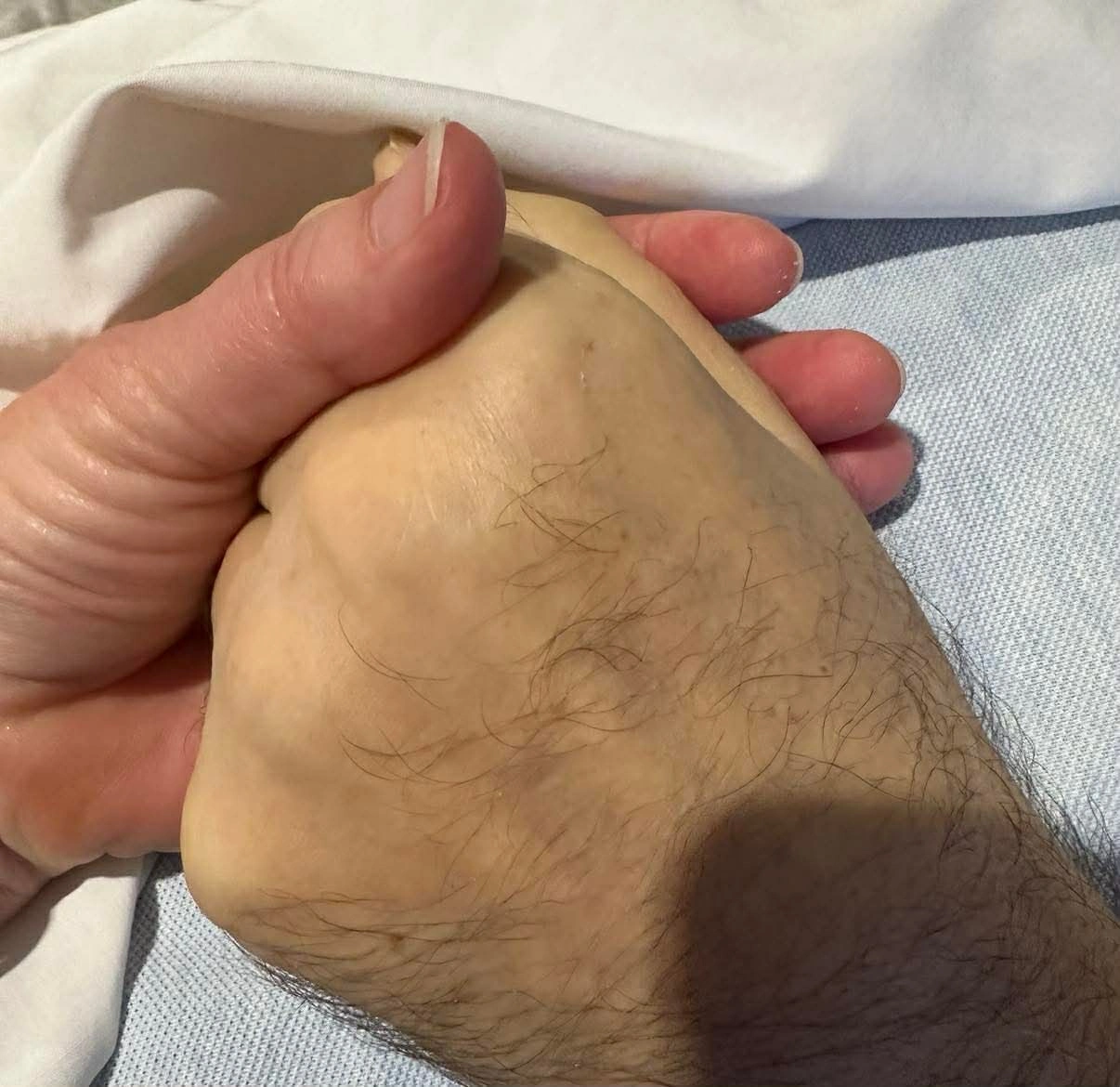
Holding On, with Grace
Even as memories fade, love remains
Testimonials
“I am incredibly grateful for the support and guidance I received. With such patience, kindness, and deep compassion, Cally helped me understand not only the practical side of coping with family members living with dementia, but also the emotional journey that comes with it. During moments when I felt overwhelmed and unsure, Cally's calm explanations and gentle reassurance made all the difference. Because of her support, I now approach my loved ones with greater empathy, understanding, and confidence. Cally's help has brought comfort not just to me, but to my entire family, and I will always be thankful for the difference Cally has made in our lives.”